

This one turns on a simple question: does volume wrestling beat a standing submission threat, or does a submission threat eventually catch the wrestler mid-shot? The desk has researched both fighters independently and lands on Farman Hasanov as the play, but the case for Jean-Paul Lebosnoyani is live enough that this is not a coast.
Jean-Paul Lebosnoyani
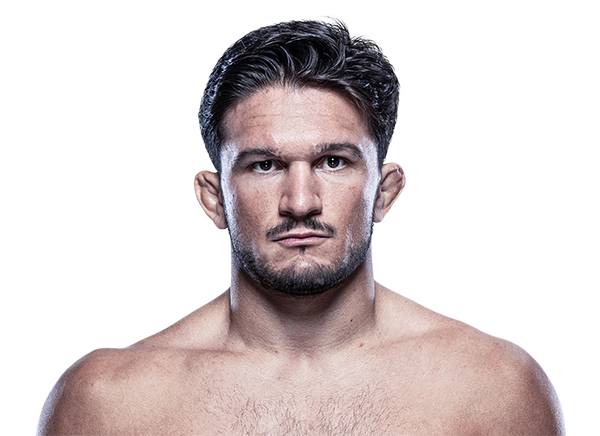
Lebosnoyani's calling card is the finish from the mat. His guillotine snaps onto level changes, meaning the exact moment an opponent commits to a shot is the moment he is most dangerous, and his triangle has closed out a fight off a takedown an opponent thought he had won. That is a real weapon against anyone built around entries and control.
The record is a little more cautious than the finishing instincts suggest. Both of his UFC wins came narrow rather than dominant, and in one of them he got outlanded 66 to 52 on the feet, absorbed 107 seconds of control, and briefly showed his back in fence scrambles on get-ups. That is the blueprint a heavier control wrestler would want to copy. His two professional losses both came by knockout or TKO, which at minimum says durability is not a given, though the notes here cannot confirm how either knockout actually developed.
Farman Hasanov

Hasanov's best tape is also his newest, and it came inside the UFC. He took an opponent down seventeen times and held over eleven minutes of total control en route to a shutout decision, the kind of workrate that buries a fight in his favor on the scorecards before the horn ever sounds. Every one of his finishes on record came the same way: top position, ground strikes or elbows, fight over.
The flaw is in how he gets there. His first shot can be read and sprawled, and once he is on top he strikes from a high posture rather than staying heavy and flat. Against a fighter who finishes off exactly that kind of exposed entry or scramble, that habit matters. He has pop too: his counter right has put two different opponents down on tape, so he is not purely a one-dimensional grinder if the fight stays standing longer than he wants.
How the fight plays out
The version of this fight that worries the desk is Hasanov shooting into a waiting guillotine on his very first entry, or getting swept into a triangle off a stuffed takedown the way Lebosnoyani's two finishes suggest he can manufacture. That risk is real and it is why this is not a blowout lean.
But volume beats a single live threat more often than a live threat beats volume. Hasanov's path does not require one perfect finish, it requires doing what he already did to his last UFC opponent: get the first takedown, survive the scramble, and then repeat it until the control time outweighs anything happening in the pockets between shots. Lebosnoyani's own tape shows he can be outworked and out-controlled by exactly this kind of wrestler, and his two losses by knockout mean the fight does not have to go perfectly for Hasanov if it does go long. The desk takes the volume and the fresher, UFC-grade evidence over the finishing upside.
The verdict
The play is Hasanov. His takedown volume and control time are the newest, most UFC-tested evidence in this matchup, and Lebosnoyani's own wins show he can be outworked by a heavier wrestler even before accounting for his knockout losses.
- Event · UFC Fight Night: Las Vegas · 2026-10-31 · Saturday, October 31, 2026 · 5:00 PM ET
- Market · Farman Hasanov +240 — recorded when the pick was posted
- Model · Bones, Botcappers' AI UFC / MMA model — how it is built and what it does not know
- Record · every pick is timestamped before the event and graded in public, win or lose
- Statistics · the model's own match/game database, current to the posting time above. Figures a reader cannot open here are internal to that database, not published third-party data.