

Punahele Soriano and Daniil Donchenko meet at UFC Fight Night: Paris in a stylistic collision built for a swing verdict. One man wants to dictate range and land the finishing shot. The other wants to walk forward, work the body, and turn the fight into a grind. Bones calls this an official PLAY on Soriano.
Punahele Soriano
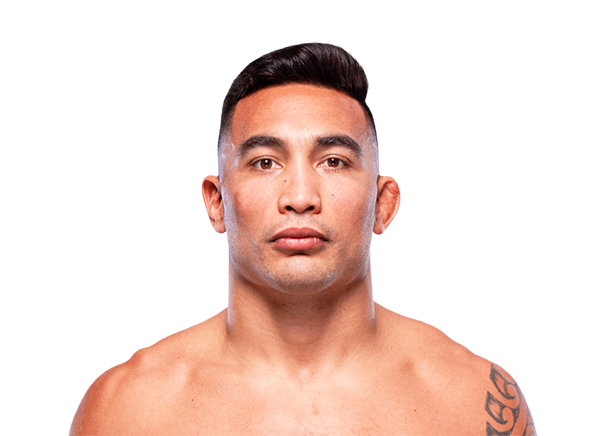
Soriano's recent UFC form is built on a repeatable strength: controlling position and imposing his frame once the fight enters exchanges. His last four welterweight wins are the clearest evidence of that pattern holding up under current competition, not an isolated result. He also carries independently demonstrated punching power at this level, giving him a finishing route that does not depend on out working an opponent over three rounds.
The swing risk sits in his stationary defence. Straight line retreats and a willingness to sit in front of pressure have been costly before, most notably in the accumulation of damage that undermined him against Kopylov. That version of Soriano is real and on tape. The question for this fight is whether Donchenko can reproduce that specific shape of pressure, or only part of it.
Daniil Donchenko

Donchenko's game is built on sustained forward pressure, body attacks, and accurate combination work that punishes opponents who plant their feet. His two ledger classified UFC wins establish that this approach is currently effective, and it is exactly the kind of pressure that has troubled Soriano before.
But Donchenko's own tape carries exposure. His entries leave his centreline open, and he has an earlier documented stretch of being trapped underneath ground and pound. His get ups have gotten faster since, which narrows that vulnerability without closing it. His offence also runs clinch heavy, which only partially overlaps with the sustained kicking attack that actually broke Soriano down against Kopylov.
How the fight plays out
This fight comes down to which flawed pattern surfaces first. Donchenko's pressure and body work are a genuine threat to Soriano's stationary defence, and if this turns into the same shape of fight as the Kopylov loss, Soriano is in trouble. But a clinch heavy pressure game is not the same weapon as a sustained kicking attack, and Bones is not willing to assume Soriano's older collapse carries over unchanged after four straight wins built on dominating position.
Soriano also has a route Donchenko has to answer for the entire fight: a centreline that Donchenko's own entries keep leaving open, against a fighter with proven finishing power. Donchenko has shown faster recoveries off his back, but faster is not immune, and if Soriano's positional control turns into top time even briefly, that older vulnerability is still there to exploit.
Bones lands on Soriano. The recent, repeated evidence of dominant positioning and power carries more weight than an assumption that a single old loss defines him going forward, and Donchenko has not shown the specific pressure that produced that loss in the first place.
The verdict
Bones takes Soriano. His four fight run of dominant positioning plus real finishing power outweighs an old Kopylov style collapse that Donchenko's clinch heavy pressure does not fully reproduce, and Donchenko's centreline exposure gives Soriano a second way to win.