

UFC 333 pairs a veteran kickboxer against a grappler who wants nothing to do with kickboxing. Rizvan Kuniev's path runs through the fence, where double underhooks and a pin can steal rounds or set up mat returns. Alexander Volkov's path runs through open space, where his reach and jab have given him an output edge in almost every decision he has fought. The desk is logging this one with no money on it, but the read still lands on a side, and it lands on Volkov.
Alexander Volkov
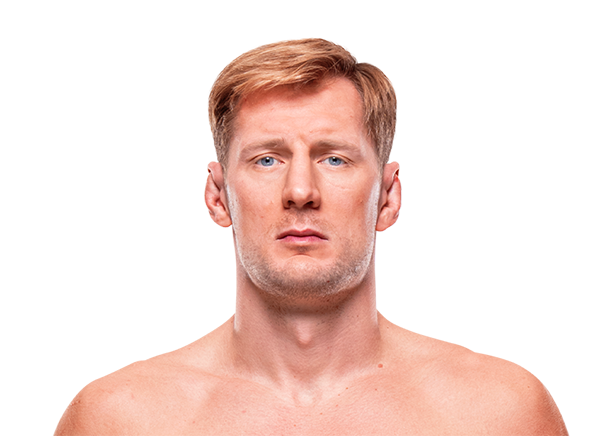
Volkov's game is built on distance management. He carries a 4-inch reach edge into the fight along with a stiff jab backed by teeps and kicks, the kind of kit that piles up volume over twenty-five minutes and has given him an output edge in almost every UFC decision he has had. The documented hole is what happens when that distance disappears. Blaydes landed 14 of 25 takedowns and racked up 1192 seconds of control time against him, Aspinall got him down with a double leg, and Almeida added 7 of 9 takedowns with 647 seconds of control in a split decision. Each name on that list shares one trait: they got their control by landing a takedown first. Against anyone who shoots, Volkov's upright base is a real liability and his bottom game trends toward survival rather than scrambling back up.
Rizvan Kuniev

Kuniev is a fence-clinch grappler, not an open-mat wrestler. His preferred route is to close distance, lock double underhooks, and pin an opponent against the cage, where he can grind out control time and land body knees or work toward mat returns. That approach beat Almeida clean: a unanimous decision in which Kuniev stuffed all eight takedown attempts and logged 395 seconds of his own control. But the tape also shows what he does not do well. At range he throws little volume, moves on slow, linear feet, keeps his head upright and his lead hand low. Fortune found him with clean overhand counters at 00:59, 01:29 and 03:40, and Blaydes out-landed him 56 to 45 on the feet. When Kuniev meets a level change, his answer is uppercuts and knees from the clinch rather than a shot of his own, which means the phase match against Volkov's one real flaw is only partial.
How the fight plays out
The fence-clinch version of this fight favors Kuniev. If he gets underhooks and pins Volkov against the cage, that is the same control-decision class that beat Volkov against Blaydes, and Volkov's bottom work leans toward limiting damage rather than scrambling back to his feet. But getting there means walking through exactly the range where Kuniev has shown the least. He throws little at distance, moves on slow feet, and keeps his head up and his lead hand low, habits that have already eaten clean counters. Volkov's jab, teeps and kicks, backed by a 4-inch reach edge, are built to punish that approach before the clinch ever happens. The common opponent cuts against a clean grappling read too: Kuniev stuffed every takedown Almeida attempted and beat him more decisively than Volkov did, who conceded 647 seconds of control in his own split decision over the same opponent. That keeps Kuniev's path-to-victory case thinner than the control numbers alone suggest, and it is why the lean sits with Volkov to win the distance battle before the fence ever becomes a factor.
The verdict
The pick is Volkov. His reach and jab sit directly on top of Kuniev's known holes at range, low lead hand, slow feet, light output, and Kuniev has to close that distance against a fighter built to make him pay for every step in. The fence-clinch path is real, but it is not automatic, and the output edge Volkov has carried through his decisions should show up again here.
- Event · UFC 333: Volkanovski vs. Evloev · 2026-10-24 · Saturday, October 24, 2026 · 10:00 AM ET
- Market · Alexander Volkov -120 — recorded when the pick was posted
- Model · Bones, Botcappers' AI UFC / MMA model — how it is built and what it does not know
- Record · every pick is timestamped before the event and graded in public, win or lose
- Statistics · the model's own match/game database, current to the posting time above. Figures a reader cannot open here are internal to that database, not published third-party data.